Filters
Question type

The photochemical cycloaddition of the structure below is related to DNA mutations causing skin cancer.Draw the structure of this dimer.Atoms other than carbon and hydrogen are labeled. The photochemical cycloaddition of the structure below is related to DNA mutations causing skin cancer.Draw the structure of this dimer.Atoms other than carbon and hydrogen are labeled.

Correct Answer

verifed

verified

[2+2] cycloaddition occurs due to photochemical conditions. 11eab917_14d8_7e55_99e6_a5ba12e5161e_TB4944_00

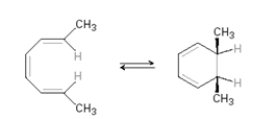
Exhibit 30-3 To answer the following question(s),consider the reaction below: Exhibit 30-3 To answer the following question(s),consider the reaction below:   -Refer to Exhibit 30-3.Explain the stereochemistry of compound Y. -Refer to Exhibit 30-3.Explain the stereochemistry of compound Y.

Correct Answer

verifed

verified

Thermal electrocyclic opening of the cis...

View Answer

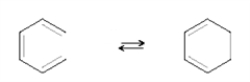
Which of the following is not an electrocyclic reaction?


A) Which of the following is not an electrocyclic reaction? A)    B)    C)    D)    E) All are electrocyclic reactions.
B) Which of the following is not an electrocyclic reaction? A)    B)    C)    D)    E) All are electrocyclic reactions.
C) Which of the following is not an electrocyclic reaction? A)    B)    C)    D)    E) All are electrocyclic reactions.
D) Which of the following is not an electrocyclic reaction? A)    B)    C)    D)    E) All are electrocyclic reactions.
E) All are electrocyclic reactions.

F) B) and D)
G) A) and D)

Correct Answer

verifed

verified

Exhibit 30-4 Consider the reaction below to answer the following question(s) : Exhibit 30-4 Consider the reaction below to answer the following question(s) :   -Refer to Exhibit 30-4.How many pairs of electrons are involved in this pericyclic reaction? A) two B) four C) eight D) sixteen -Refer to Exhibit 30-4.How many pairs of electrons are involved in this pericyclic reaction?


A) two
B) four
C) eight
D) sixteen

E) None of the above
F) A) and D)

Correct Answer

verifed

verified

For an even number of electron pairs (double bonds) ,which of the following rules is correct?:


A) thermal conditions - controtatory,photochemical conditions - disrotatory
B) thermal conditions - disrotatory,photochemical conditions - conrotatory

C) A) and B)
D) undefined

Correct Answer

verifed

verified

The mnemonic phrase "The Electrons Circle Around",TECA,assists in predicting stereochemistry of pericyclic reactions.Describe application of this mnemonic.

Correct Answer

verifed

verified

The mnemonic TECA assists us in remember...

View Answer

Exhibit 30-3 To answer the following question(s),consider the reaction below: Exhibit 30-3 To answer the following question(s),consider the reaction below:   -Refer to Exhibit 30-3.Two pericyclic reactions are involved in this synthesis of compound Y.Draw the structure of intermediate X and name it using IUPAC nomenclature. -Refer to Exhibit 30-3.Two pericyclic reactions are involved in this synthesis of compound Y.Draw the structure of intermediate X and name it using IUPAC nomenclature.

Correct Answer

verifed

verified

Exhibit 30-4 Consider the reaction below to answer the following question(s): Exhibit 30-4 Consider the reaction below to answer the following question(s):   -Refer to Exhibit 30-4.Explain the stereochemistry of this reaction. -Refer to Exhibit 30-4.Explain the stereochemistry of this reaction.

Correct Answer

verifed

verified

The reaction of heptafulvene w...

View Answer

Exhibit 30-5 To answer the following question(s),consider the reaction below: Exhibit 30-5 To answer the following question(s),consider the reaction below:   -Refer to Exhibit 30-5.Propose a mechanism for the reaction that fully accounts for the formation of both products. -Refer to Exhibit 30-5.Propose a mechanism for the reaction that fully accounts for the formation of both products.

Correct Answer

verifed

verified

blured image This reaction occurs with suprafacial s...

View Answer

Exhibit 30-6 Consider the reaction sequence below to answer the following question(s) : Exhibit 30-6 Consider the reaction sequence below to answer the following question(s) :   -Refer to Exhibit 30-6.Step 2 is an example of: A) an electrocyclic reaction. B) a cycloaddition reaction. C) a sigmatropic rearrangement. D) a reverse cycloaddition reaction. -Refer to Exhibit 30-6.Step 2 is an example of:


A) an electrocyclic reaction.
B) a cycloaddition reaction.
C) a sigmatropic rearrangement.
D) a reverse cycloaddition reaction.

E) A) and C)
F) C) and D)

Correct Answer

verifed

verified

Predict the product of the following reaction. Predict the product of the following reaction.

Correct Answer

verifed

verified

Exhibit 30-7 Consider the Sommelet-Hauser rearrangement below to answer the following question(s) : Exhibit 30-7 Consider the Sommelet-Hauser rearrangement below to answer the following question(s) :   -Refer to Exhibit 30-7.The Sommelet-Hauser rearrangement is an example of a [2,3] sigmatropic rearrangement.How many pairs of electrons are involved in this reaction? A) two B) three C) four D) five -Refer to Exhibit 30-7.The Sommelet-Hauser rearrangement is an example of a [2,3] sigmatropic rearrangement.How many pairs of electrons are involved in this reaction?


A) two
B) three
C) four
D) five

E) None of the above
F) B) and C)

Correct Answer

verifed

verified

B

Exhibit 30-6 Consider the reaction sequence below to answer the following question(s) : Exhibit 30-6 Consider the reaction sequence below to answer the following question(s) :   -Refer to Exhibit 30-6.Step 1 is an example of: A) an electrocyclic reaction B) a cycloaddition reaction C) a sigmatropic rearrangement D) a reverse cycloaddition reaction -Refer to Exhibit 30-6.Step 1 is an example of:


A) an electrocyclic reaction
B) a cycloaddition reaction
C) a sigmatropic rearrangement
D) a reverse cycloaddition reaction

E) B) and D)
F) B) and C)

Correct Answer

verifed

verified

Exhibit 30-6 Consider the reaction sequence below to answer the following question(s): Exhibit 30-6 Consider the reaction sequence below to answer the following question(s):   -Refer to Exhibit 30-6.Show how C is formed from B. -Refer to Exhibit 30-6.Show how C is formed from B.

Correct Answer

verifed

verified

Under thermal conditions,the following substance will undergo: Under thermal conditions,the following substance will undergo:   A) disrotatory cyclization. B) conrotatory cyclization. C) no reaction.


A) disrotatory cyclization.
B) conrotatory cyclization.
C) no reaction.

D) A) and B)
E) A) and C)

Correct Answer

verifed

verified

A

In which type of pericyclic reaction is a σ bond broken and a new σ bond formed?


A) cycloaddition
B) photochemical electrocyclic
C) thermal electrocyclic
D) sigmatropic rearrangement.
E) all of the above

F) A) and B)
G) B) and D)

Correct Answer

verifed

verified

Exhibit 30-2 Consider the reaction below to answer the following question(s): Exhibit 30-2 Consider the reaction below to answer the following question(s):   -Refer to Exhibit 30-2.Under what conditions,thermal or photochemical,would you carry out this reaction? Explain. -Refer to Exhibit 30-2.Under what conditions,thermal or photochemical,would you carry out this reaction? Explain.

Correct Answer

verifed

verified

For a disrotatory cyclization to occur t...

View Answer

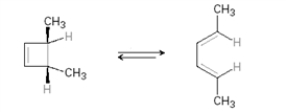
Exhibit 30-2 Consider the reaction below to answer the following question(s): Exhibit 30-2 Consider the reaction below to answer the following question(s):   -Refer to Exhibit 30-2.Has this reaction taken place in a conrotatory manner or in a disrotatory manner? -Refer to Exhibit 30-2.Has this reaction taken place in a conrotatory manner or in a disrotatory manner?

Correct Answer

verifed

verified

In order for the hyd...

View Answer

Exhibit 30-9 Vitamin D3,cholecalciferol,is synthesized under the skin by the photochemical pericyclic process shown below.Answer the following question(s) about these reactions. Exhibit 30-9 Vitamin D<sub>3</sub>,cholecalciferol,is synthesized under the skin by the photochemical pericyclic process shown below.Answer the following question(s)  about these reactions.   -Refer to Exhibit 30-9.The first step in this process is a(n) : A) sigmatropic rearrangement B) cycloaddition reaction C) annulation reaction D) electrocyclic reaction -Refer to Exhibit 30-9.The first step in this process is a(n) :


A) sigmatropic rearrangement
B) cycloaddition reaction
C) annulation reaction
D) electrocyclic reaction

E) C) and D)
F) A) and C)

Correct Answer

verifed

verified

Under photochemical conditions,the following substance will undergo: Under photochemical conditions,the following substance will undergo:   A) disrotatory cyclization. B) conrotatory cyclization. C) no reaction.


A) disrotatory cyclization.
B) conrotatory cyclization.
C) no reaction.

D) A) and C)
E) A) and B)

Correct Answer

verifed

verified

Showing 1 - 20 of 44

Related Exams

Show Answer